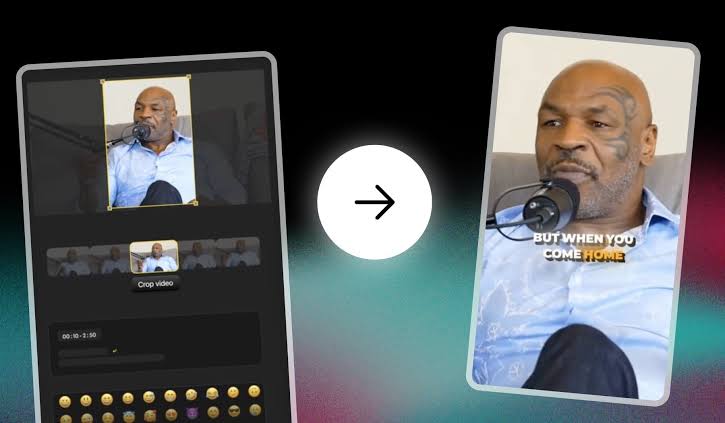
Video content is one of the most effective ways to grow an audience, but editing can quickly become the biggest bottleneck. Traditionally, creators spent hours cutting footage, adding captions, resizing videos and exporting different versions for every platform.
Today, AI video clipping software can automate much of that work, allowing creators to produce significantly more content in less time.
So, should you rely on AI, stick with manual editing, or combine both? In this guide, we’ll compare AI video clipping and manual editing to help you decide which approach best suits your workflow.
What Is AI Video Clipping?
AI video clipping uses artificial intelligence to automatically analyse long-form videos and create short, shareable clips.
Instead of editing frame by frame, AI can:
Detect engaging moments
Remove silence and filler words
Generate captions automatically
Reframe videos for vertical viewing
Create multiple clips from one recording
Optimise videos for different social media platforms
The goal is to reduce editing time while maintaining professional-quality results.
What Is Manual Video Editing?
Manual editing gives creators complete control over every aspect of a video.
Using editing software, you decide:
Where every cut happens
Which clips to include
Caption timing
Music selection
Visual effects
Animations
Colour grading
Transitions
While this offers maximum creative freedom, it also requires considerably more time and experience.
Speed Comparison
For most creators, speed is the biggest difference.
With manual editing, producing a single 60-second clip can take anywhere from 30 minutes to several hours depending on complexity.
AI dramatically reduces that process by analysing the footage automatically and generating multiple clips within minutes.
If your goal is to publish consistently, AI has a significant advantage.
Content Output
Manual editing often limits how much content you can produce because every clip requires individual attention.
AI changes that completely.
Instead of creating one clip, you can generate dozens from a single recording.
For example:
One podcast episode
One webinar
One interview
One tutorial
can all become weeks of social media content.
For creators focused on growth, higher content output often leads to more opportunities to reach new audiences.
Quality Comparison
Manual editing still offers the highest level of creative precision.
Editors can carefully adjust pacing, storytelling, sound design and visual effects to create polished productions.
However, AI has improved dramatically in recent years.
Modern AI tools produce professional-quality clips with:
Smooth cuts
Accurate captions
Smart face tracking
Automatic reframing
Consistent formatting
For everyday social media content, AI quality is now more than sufficient for most creators.
Creativity
Manual editing gives you unlimited creative control.
You can experiment with:
Cinematic storytelling
Motion graphics
Advanced transitions
Custom animations
Visual effects
Sound design
AI focuses on speed and efficiency rather than artistic expression.
If you’re producing commercials, documentaries or cinematic films, manual editing remains the better option.
If you’re creating educational content, podcasts, interviews or marketing videos, AI is often the more practical choice.
Cost Comparison
Manual editing may require:
Expensive editing software
High-performance computers
Freelance editors
Significant time investment
AI platforms typically charge a monthly subscription while replacing many repetitive editing tasks.
For businesses and creators publishing regularly, the time saved often outweighs the subscription cost.
Learning Curve
Professional editing software can take months to master.
Creators often spend years learning advanced techniques.
AI tools are designed for simplicity.
Most users can upload a video, generate clips and publish content with very little training.
This makes AI accessible to beginners and experienced creators alike.
Accuracy
Some creators worry that AI won’t choose the right moments.
Modern AI models analyse factors such as:
Speech patterns
Topic changes
Emotional tone
Audience retention signals
Keywords
Conversation flow
While occasional manual adjustments may improve results, AI is becoming increasingly accurate at identifying engaging clips.
Scalability
As your content grows, manual editing becomes harder to maintain.
Publishing every day across TikTok, Instagram, YouTube, LinkedIn and Facebook can quickly become overwhelming.
AI makes scaling much easier by automating repetitive editing tasks and allowing creators to produce content for multiple platforms simultaneously.
For agencies and businesses managing several brands, this scalability is one of AI’s biggest advantages.
When Manual Editing Is the Better Choice
Manual editing remains ideal when you need:
Feature films
Commercial advertisements
High-end brand campaigns
Music videos
Advanced motion graphics
Complex storytelling
Detailed visual effects
Projects that require artistic precision still benefit from a skilled editor.
When AI Video Clipping Is the Better Choice
AI is an excellent choice if you want to:
Repurpose long-form videos
Create content consistently
Grow on social media
Save editing time
Produce multiple clips from one recording
Publish across multiple platforms
Scale content production
For most creators, these advantages make AI the more practical solution.
The Best Approach: Combine Both
The most effective workflow isn’t choosing one over the other.
Many successful creators use AI to generate the first version of their clips and then make small manual adjustments before publishing.
This approach combines:
AI speed
Professional consistency
Creative control
Faster production
Instead of replacing editors, AI becomes a powerful assistant that removes repetitive work.
Frequently Asked Questions
Is AI video editing replacing human editors?
No. AI automates repetitive editing tasks, but creative professionals are still essential for projects requiring storytelling, branding and advanced production techniques.
Is AI faster than manual editing?
Yes. AI can create multiple social media clips in minutes, while manual editing often takes significantly longer.
Which produces better quality?
Manual editing offers greater creative control, but AI produces professional-quality results that are more than sufficient for most social media content.
Can AI replace editing software?
For many creators producing short-form content, AI platforms can handle the majority of editing tasks. More advanced productions may still require traditional editing software.
Should beginners use AI?
Absolutely. AI makes professional-quality editing accessible without requiring years of experience.
Final Thoughts
AI video clipping and manual editing each have their strengths, but they serve different purposes. Manual editing excels when creativity and precision are the priority, while AI is unmatched for speed, scalability and content repurposing.
For creators, businesses and agencies